> BLOG
By Yann A. Skaalen, Co-founder of Velocity North
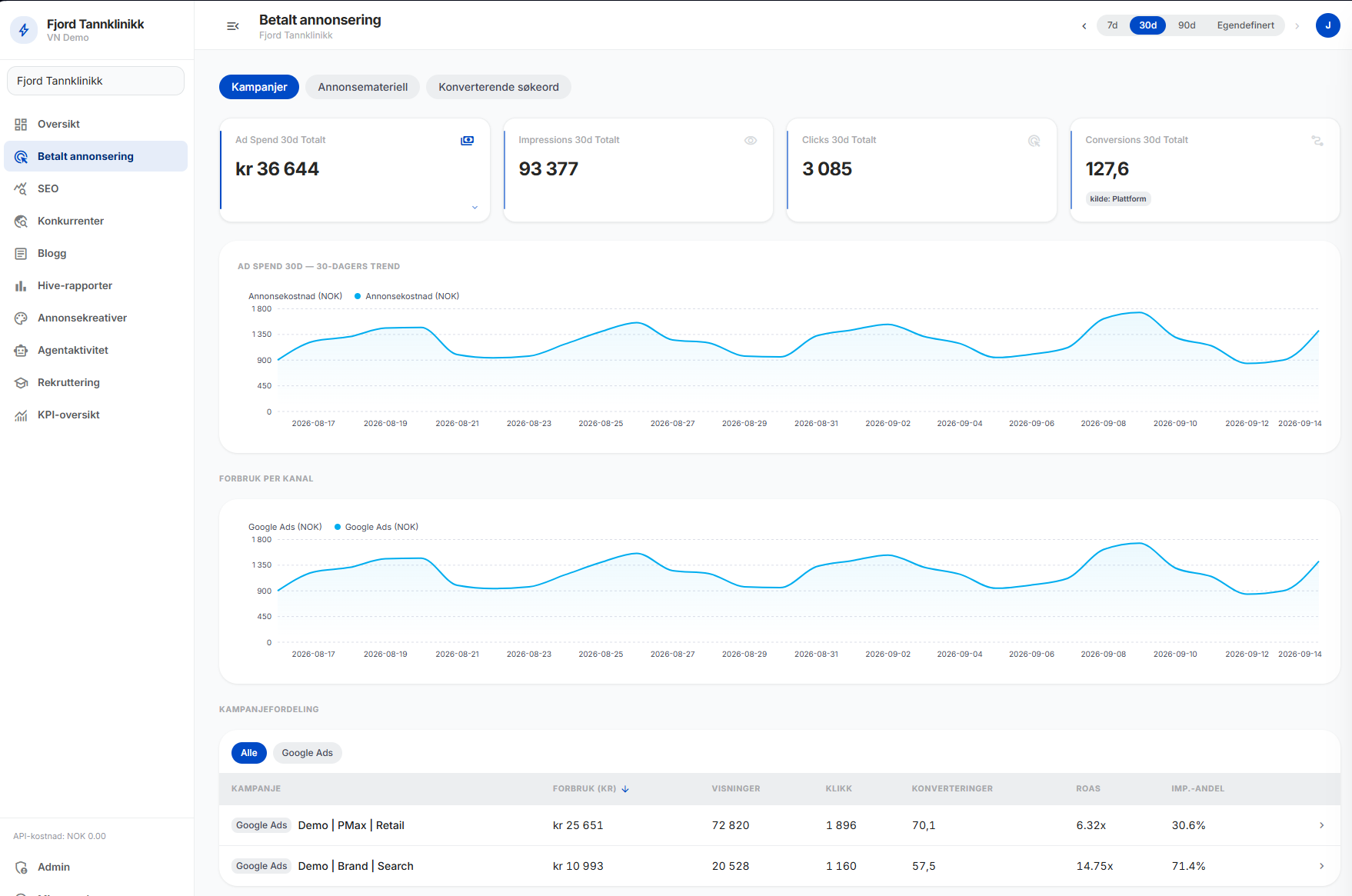
You log into Google Ads or Meta, you look at the numbers on your marketing dashboard, and you assume those numbers are what happened. They aren’t. They’re what survived.
I’ve spent thirty years around advertising data, much of it in finance, which is the most heavily tracked and most heavily regulated corner of the business there is. The single most expensive misunderstanding I see in growing companies is this one: treating the marketing dashboard as a record of reality, when it is really a record of the fraction of reality the browser allowed the platform to keep.
Where the missing conversions go
The mechanics are not mysterious. Cookie consent walls let a large share of your visitors decline tracking outright. Safari’s ITP and Apple’s iOS ATT cut the cookies and identifiers that ad platforms rely on to connect a sale back to the click that caused it. None of this is the platform being dishonest. It simply cannot see what the browser and the operating system have decided to hide from it, and therefore from your marketing dashboard.
The result is a hole, and in regulated sectors like finance and health the hole is enormous. Anywhere from 30 to 50 percent of conversions can vanish from the dashboard entirely. Not delayed. Not double-counted. Gone. Half your sales, in the worst cases, leaving no trace in the place you go to decide what’s working.
A measurement error of a few percent you could live with. A third to a half is not an error you manage around. It is enough to make a profitable campaign look like a failure and a mediocre one look fine, and you would never know which was which.
Your marketing dashboard is only the beginning
For years this gap mostly produced bad reports, and a careful operator could partly compensate by knowing the marketing dashboard understated the truth. That cushion is disappearing, because the platforms’ own AI now bids automatically on exactly the conversions it can see.
Think about what that means. The machine optimises toward the surviving half of your data and treats the missing half as if it never happened. It will confidently pour budget into whatever looks good through a crippled lens and starve whatever happens to lose its conversions to consent and iOS. Feed an automated bidder half the picture and it doesn’t hesitate — it optimises hard, in the wrong direction, every hour of the day.
You cannot grow what you cannot measure. We have now built machines that scale that old problem at a speed no human ever could.
Closing the gap
This is the problem Digtective was built to solve, and the reason why it forms the basis for all the work we do at Velocity North. Instead of waiting for the browser to hand over a conversion it has already decided to suppress, we capture every conversion server-side, where the sale actually happens, and we do it in a way that stays fully GDPR compliant. The conversion is recorded because it occurred, not because a cookie was permitted to follow someone around.
Then we close the loop. Where a recovered conversion still carries a click ID from Google or Meta, we send that signal back to the platform through its Conversion API. Now the platform’s bidding is optimising on real conversions, not just on the slice that leaked through the browser. The same automation that was working against you starts working with you, because for the first time it is being fed what actually happened. The same correct data that now improves your marketing dashboard can improve the bidding algorithm.
This is honest, server-side conversion tracking, counting the sales that really occurred and tying them back to the click that drove them. It is the foundation everything else sits on. Get this layer wrong and every clever thing you build on top of it inherits the error, including your marketing dashboard.
So before you trust another marketing dashboard, or hand your budget to anything that optimises automatically, ask one question: is this measuring what happened, or only what survived the browser? If you’re not certain, that’s exactly where we start. Let’s talk.